A drop is a controlled shot intended to land short and reduce an opponent’s attacking opportunity. The third shot comes after the serve and return.
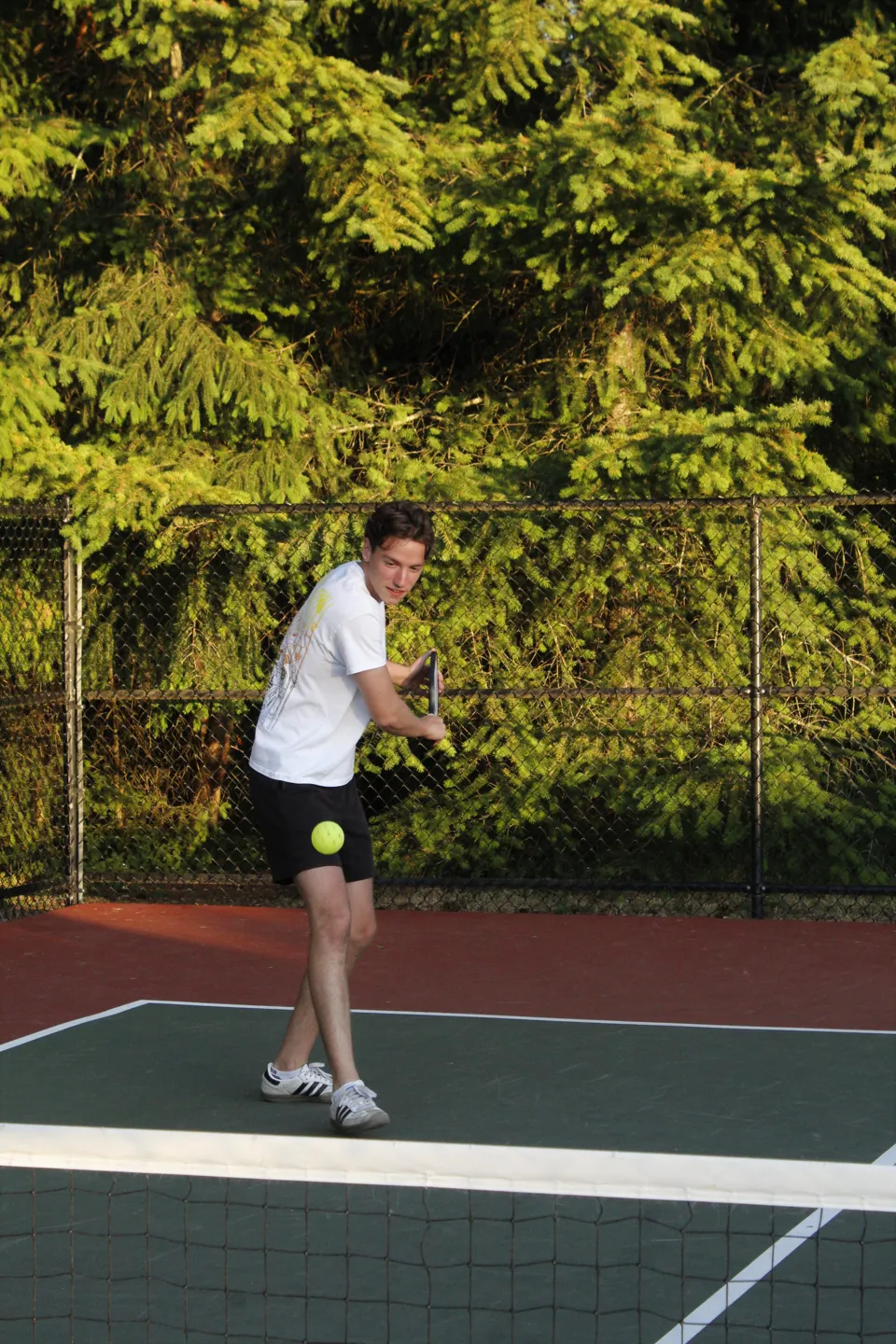

Know the job of the shot
The goal is not simply to hit a ball slowly. A useful drop can create time to improve court position. Whether to drop, drive, or use another option depends on the incoming ball, balance, opponents, and partner—not a rule requiring every third shot to be a drop.
Selkirk’s instruction emphasizes coordinated preparation and controlled force rather than an arm-only motion. Technique details should be adapted with a coach to the player, not forced from a written checklist.
An original cooperative progression
- Start with gentle feeds from a comfortable distance and choose a broad short target.
- Alternate feeder and hitter; record how many feeds produce a controllable response.
- Move the starting position back only when both partners can keep the exercise calm.
- Finish with a serve, bounced return, and a deliberate third-shot choice.
Do not rush to the net just because you attempted a drop. Observe the opponent’s contact and whether you can move and stop under control. This progression is editorial practice design, not validated coaching.
When the attempt breaks down
| Problem to observe | One variable to test |
|---|---|
| Contact feels rushed | Slow the feed and begin closer |
| Ball arrives too high | Reduce the target difficulty and discuss trajectory with a coach |
| Players collide or separate | Pause; agree on communication and movement |
| Practice succeeds but games do not | Add varied feeds gradually and keep a record of conditions |
Changing all variables at once makes it hard to learn what helped. Do not interpret one miss as evidence that the paddle is wrong.
What to learn next
Watch the linked instruction as a demonstration, then choose one question to ask a coach. Our soft-game plan is a starting exercise, not a complete third-shot curriculum. For advanced strategy, record a match only with venue and player permission, then identify a few decision moments rather than promising a rating increase.
Sources and scope
- Morgan Evans / Selkirk: third-shot drop instruction, published January 16, 2026
- USA Pickleball: two-bounce rule
Sources checked October 29, 2026. Rulebooks govern rules; technique choices and original exercises are editorial suggestions. No coaching validation or hands-on testing is claimed.